How to estimate home EV charging cost without double-counting losses
Estimate home electric vehicle charging from wall kWh or mileage, account for charging losses once, and compare time-of-use tariffs fairly.
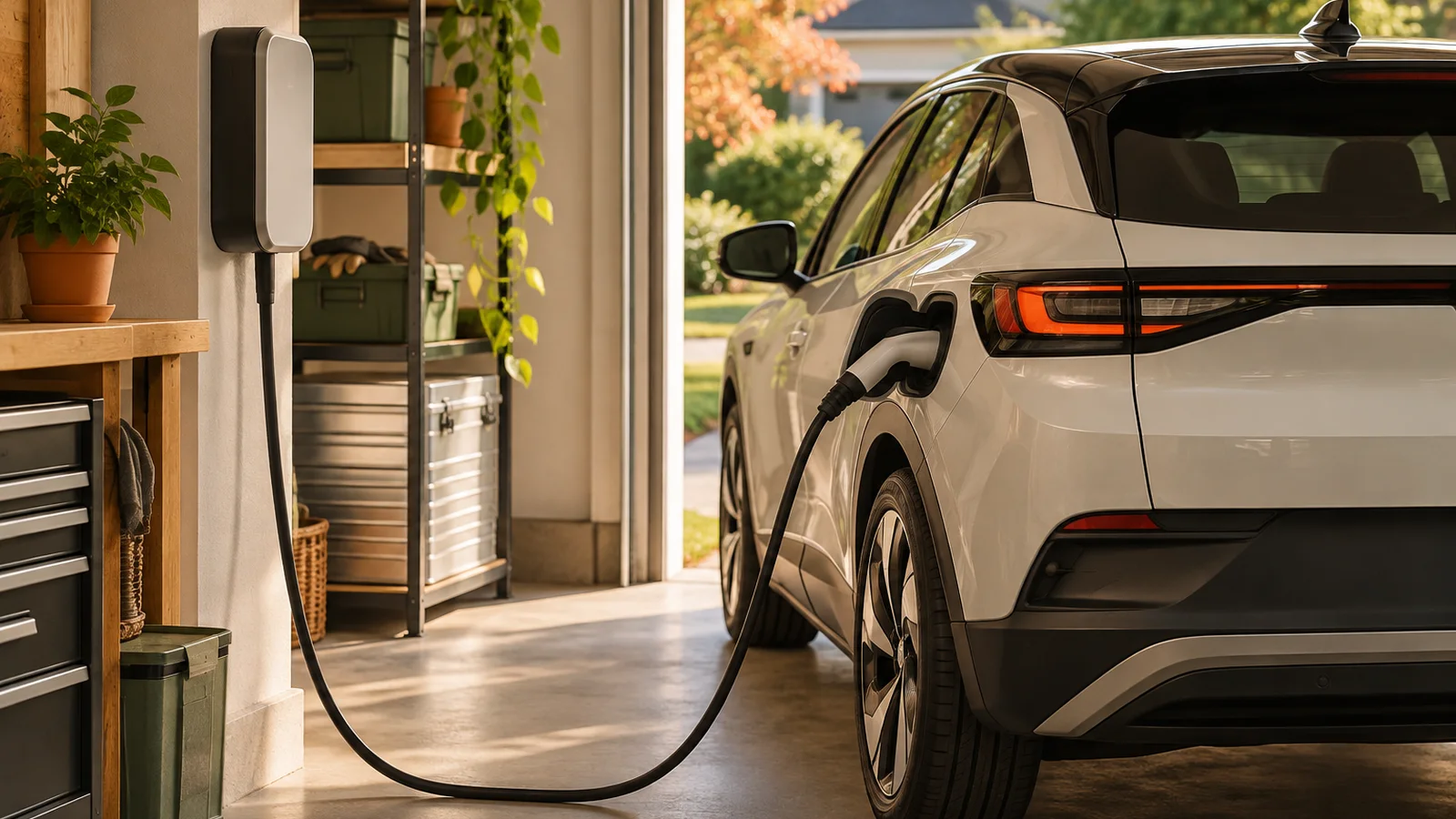
Estimate home EV charging cost from electricity measured at the wall whenever possible: wall kWh multiplied by the applicable variable electricity price. If you start from driving miles and battery-side efficiency instead, account for charging losses once to estimate wall energy. Do not add a loss factor to an efficiency figure that already includes charging losses. Public charging fees and installation costs belong in separate parts of the budget.
Establish the energy boundary
A vehicle display, charging station, utility meter, and published efficiency label may report energy at different boundaries. Determine whether the figure represents battery use or electricity drawn from the grid. A wall measurement already includes energy consumed during that measured charging session, so increasing it again for the same losses would double-count them.
FuelEconomy.gov explains that charging efficiency can vary. This guide does not apply a universal loss percentage to every vehicle, charger, season, or session. Use documented vehicle efficiency assumptions or measured wall energy for your own setup. Heating or cooling the vehicle while plugged in, battery conditioning, and standby consumption may also affect meter readings. Keep those effects in view instead of calling every difference a battery fault.
Work a mileage-based example
Illustrative example: monthly driving is 900 miles and assumed battery-side consumption is 0.30 kWh per mile. Battery energy is 900 × 0.30 = 270 kWh. If assumed charging efficiency is 90%, wall energy is 270 ÷ 0.90 = 300 kWh. At an illustrative 16-cent variable rate, charging energy costs 300 × $0.16 = $48 before other tariff effects.
| Step | Illustrative assumption | Result |
|---|---|---|
| Battery energy | 900 miles × 0.30 kWh/mile | 270 kWh |
| Wall energy | 270 ÷ 0.90 | 300 kWh |
| Variable cost | 300 × $0.16 | $48 |
| Cost per mile | $48 ÷ 900 | About 5.3 cents |
These are not claims about a specific car or current utility rate. If your starting figure were already 300 wall kWh, you would skip the efficiency division. Match the units carefully when using kWh per 100 miles: divide the mileage by 100 before multiplying by that efficiency figure.
Use the applicable electricity price
A flat tariff may allow a straightforward variable supply-plus-delivery rate. A time-based tariff requires assigning wall energy to the actual charging intervals. Charging that starts off peak can continue into peak hours; a timer's start time alone does not establish the total price. Use interval data or session records that capture the whole session.
Illustrative comparison: 300 kWh entirely at 10 cents costs $30, while 300 kWh at 25 cents costs $75. That difference is arithmetic, not a promise that an EV tariff will save $45. A new plan could also change the price of the home's remaining electricity and add a fixed fee. Compare the full household bill, especially if switching to an EV-oriented plan makes daytime cooling more expensive.
Isolate vehicle energy from household changes
Compare usage before and after charging with attention to weather, occupancy, billing days, and other equipment. A winter increase can include heating as well as the vehicle. A charging station's wall-energy record can provide a more targeted estimate than subtracting two whole-house bills, but check its measurement scope and whether it includes standby consumption.
For a useful annual model, separate home charging from public or workplace charging. Public sessions may use per-kWh pricing, time pricing, session fees, membership fees, or parking charges under the applicable service. Use the actual receipt and terms. Do not multiply all driving miles by a home rate when a meaningful share of charging happens elsewhere. Likewise, do not claim workplace charging is permanently free without checking the policy.
Budget for equipment separately
Installation, a new circuit, service upgrades, permits, and equipment purchases are capital costs, not monthly energy use. Obtain qualified local advice and quotes for electrical work rather than assuming every garage can safely support a particular charging setup. Follow the vehicle and charging equipment instructions; this cost worksheet is not an installation or wiring guide.
If comparing an optional equipment upgrade solely for tariff savings, calculate incremental annual savings and compare them with the full incremental cost. An illustrative $120 annual saving does not instantly recover a $1,200 upgrade. Rebates and tax incentives have separate eligibility and timing rules; do not count one without verifying the current official program and your circumstances. A professional can help assess electrical capacity, while a tax professional may be appropriate for a material tax-credit question.
Check the estimate against sessions
Keep a month of charging records with dates, wall kWh where available, and the rate band used. Compare the modeled energy with the measured total before extrapolating to a year. A road trip, cold period, or unusually low driving month should be noted. If records are incomplete, present a range of scenarios rather than claim a precise actual monthly cost. Revisit the calculation when your driving pattern or tariff changes.
FAQ
Should I always add a charging-loss percentage?
No. First establish whether your starting consumption figure is battery-side or wall-side. Add losses only if they are not already included.
Is overnight charging always cheaper?
Only if the applicable tariff prices those hours lower after considering all fees and the rest of the household's usage.
Can the time-of-use calculator estimate my new bill?
It can compare a two-band whole-house scenario using total kWh and peak share. It does not model public charging, installation, or complex EV tariffs.
Related reading
Sources
- FuelEconomy.gov: all-electric vehicles — energy boundaries and variable charging efficiency.
- EIA: time-based programs — tariff types and data limitations.